
Voice-Based Document Creation Wins Grand Prize at AI Hack Camp 2026
National Science Museum: 410 teams applied, and 12 teams advanced to the finals
Teams were recruited in digital health, safety, inclusion, and education
Winners were selected by combining expert evaluation (70%) and public voting (30%)
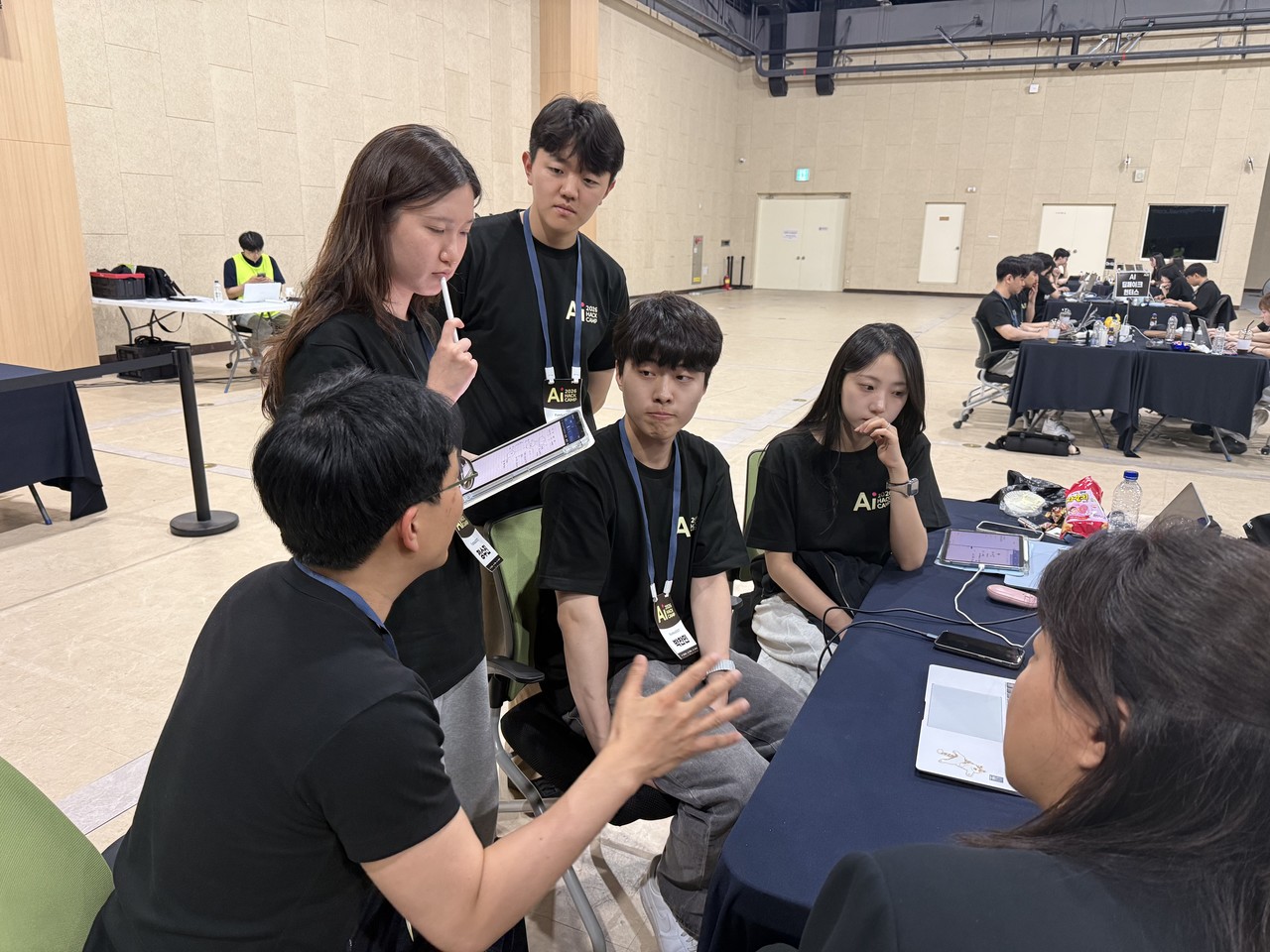
AI Hack Camp 2026 concluded with its final competition held over two days, May 16 and 17. This year, 410 teams participated, and the final 12 teams advanced to the finals. [Photo: Reporter Gil Ae-gyeong]
“My parents’ farmland was completely burned in a fire in Andong, North Gyeongsang Province last year, and I wanted to help them, so I joined.” (Choi Yu-gyeong and Kim Ga-on, Yonsei University)
“While working as a loss adjuster, I wanted to propose a system that could resolve inconveniences people experience.” (Kim Do-mu, loss adjuster)
From the desire to support their parents to the wish to help people with physical difficulties, science and engineering talent came together to tackle real-world problems. The AI Hack Camp 2026 finals, which began in March and were held over two days on May 16 and 17, brought together 12 finalist teams that developed, refined, demonstrated, and competed with the solutions they had prepared.
The National Science Museum announced on May 19 that it had completed the 63-day schedule of AI Hack Camp 2026 at the Future Technology Hall on May 16 and 17 and selected the final winning teams. A total of 410 teams and 896 people applied this year, marking a competition ratio of 34.2 to 1.
This year's competition was held under the theme of “developing AI innovation solutions that change people's lives.” Participants chose one of four fields: digital health, digital safety, digital inclusion, and digital education, and submitted development plans.
By field, 88 teams joined digital health, 93 joined digital safety, 122 joined digital inclusion, and 107 joined digital education. Through evaluation by an expert judging panel, three teams from each field, 12 teams in total, advanced to the finals.
The finals were held over two days from May 16 to 17. Participating teams refined their projects through on-site and online mentoring, then delivered presentations and demonstrations. Judging combined expert evaluation (70%), based on suitability, safety, creativity, feasibility, and scalability, with public voting (30%). A total of 2,665 people participated in online and on-site public voting.
The Grand Prize (Deputy Prime Minister and Minister of Science and ICT Award) went to the DevFive team, made up of four members from the company DevFive. The team developed a “conversational AI companion service” that helps older adults and people with disabilities create public HWP documents using only voice, photos, and handwriting on a board. It was recognized for expanding digital administrative accessibility from the level of “reading” to the level of “writing.”
The Excellence Prize went to the CSI team, made up of four members from Hanshin University. CSI presented technology that uses Wi-Fi signals (CSI) and on-device AI to monitor patient conditions in real time without cameras or body-worn sensors. The solution is notable for reducing the burden on medical staff and improving the ability to detect emergencies.
Excellence Awards went to AI Deepfake Hunters (four members from Gachon University), On-Kid (four members from Hanbat National University), and Sregeetong (four members from Korea University). AI Deepfake Hunters developed a service that registers the voices of family members and acquaintances and detects voice phishing through real-time voice verification. On-Kid implemented a multimodal fairy-tale learning platform for children with hearing and visual impairments, while Sregeetong proposed a service that analyzes AI road-view data to guide wheelchair- and stroller-accessible routes.
Popularity Awards and Encouragement Awards also went to practical, everyday AI ideas. The Red Ribbon team, a one-person team, presented a system that uses AI to analyze past medical records and insurance subscription history to find missed insurance payouts and provide one-stop support for claiming indemnity insurance through linkage with hospital records.
Only Human Beats, a four-member team including Dongguk University participants, drew attention with real-time deepfake detection during video calls based on subtle changes in blood flow (rPPG) and visual patterns. Chapchyu, a two-member team including Pabilica participants, was recognized for technology that uses AI to analyze the destination URLs and risk signals of QR codes that are difficult to identify with the naked eye, helping prevent quishing scams and malicious app installation.
The NongjiAn team, made up of four members including Yonsei University participants, developed an AI-based SaaS platform that objectively automates agricultural disaster insurance loss assessment by integrating satellite imagery, weather data, and field photos. The Fundus2OCT team, made up of four UNIST members, presented technology that uses AI to synthesize OCT cross-sectional images from standard fundus photos and analyze the possibility of glaucoma progression, ranking first in public voting.
Other Encouragement Award winners included the AI scientist persona service “Awaken Science” by Google and Seoul National University participants, and “Popo,” an ecological education platform by a three-member team from Daelim University. Members of Korea's leading AI community AI Friends Association, including Lee Jung-won, vice president of Pebblous; Choi Woo-sung, team leader at Korea Electric Power Corporation; and Won Jong-yoon, professor at Tongmyong University, participated as mentors and judges. The mentors offered advice not only on AI services but also on business feasibility, including costs and revenue generation.
Kwon Seok-min, director of the National Science Museum, said, “This competition is highly meaningful because citizens participated directly as co-existence designers in the AI era, going beyond the role of consumers.” He added, “We hope the solutions developed here will become practical starting points for filling blind spots in society and improving quality of life.”
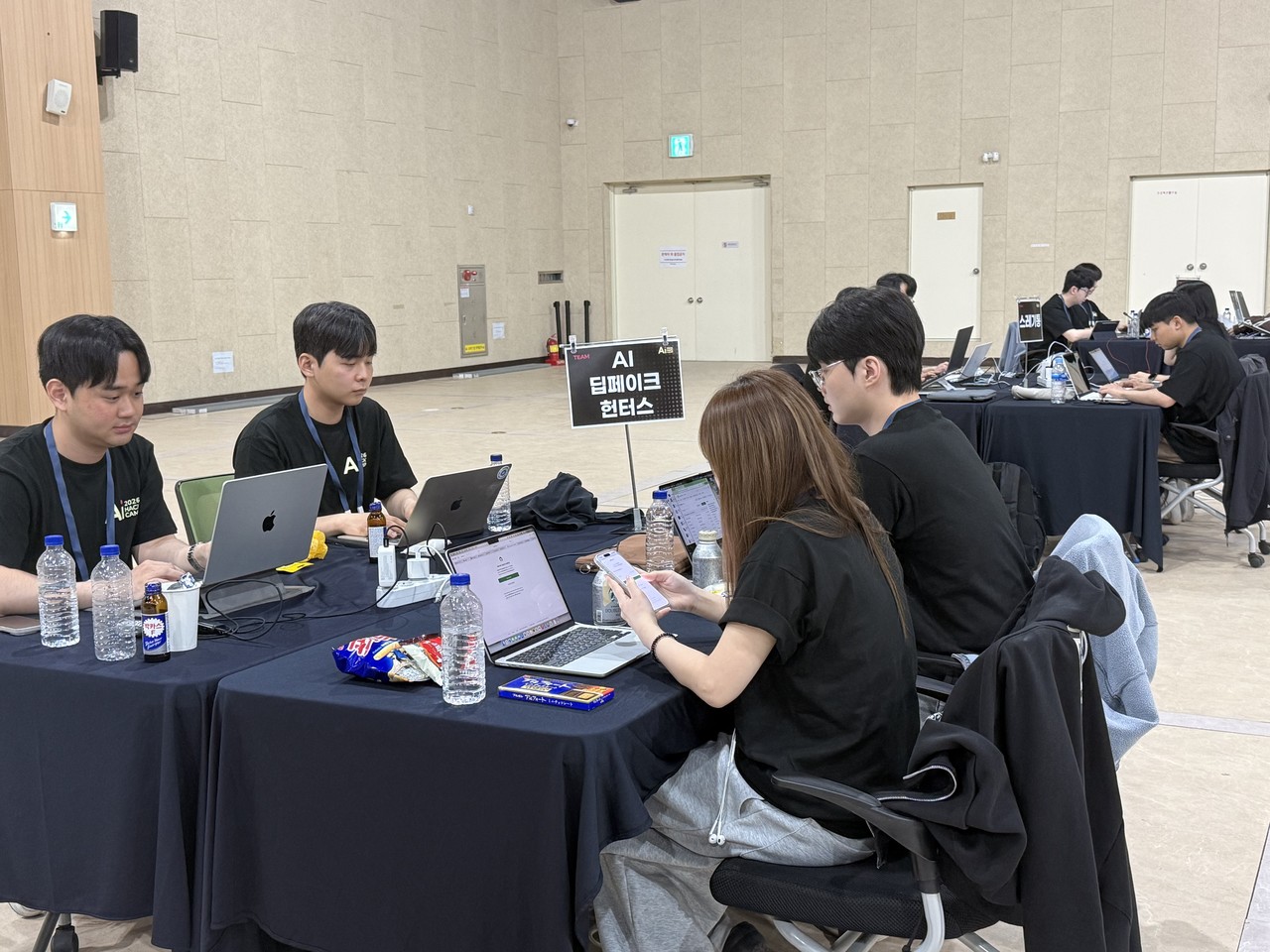
Teams participating in AI Hack Camp 2026. [Photo: Reporter Gil Ae-gyeong]
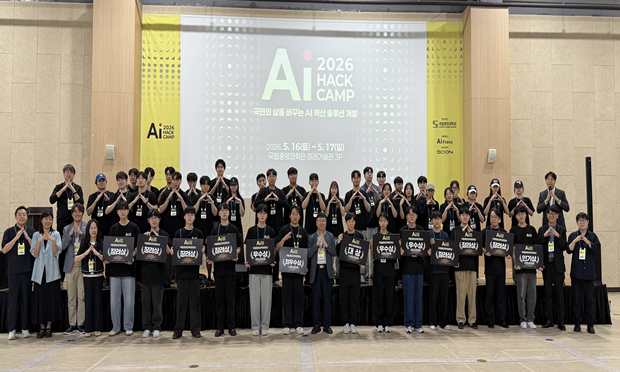
The 12 finalist teams received the Grand Prize, Excellence Prize, Excellence Awards, and Encouragement Awards. [Photo: National Science Museum]